
How to Get Your Roof and Gutters Ready for Fall in Warrenton
Fall is the season your roof gets graded on the summer it just survived. Months of 90 degree sun, pop up thunderstorms, and the occasional hail cell have all left their marks, and the freeze thaw cycles of a Virginia winter are coming to find every one of them.
The homeowners who sail through January are the ones who spend a little attention in September and October. Here is a practical fall checklist for Warrenton homes, most of it doable from the ground, plus the parts worth handing to a professional.
How do you prepare a roof for fall and winter?
Inspect the roof for summer damage like cracked, curled, or missing shingles, clean gutters and downspouts after the leaves drop, check flashing around chimneys and vents, and look inside the attic for stains, daylight, and blocked ventilation. Handle small repairs in fall, because minor gaps become major leaks once freeze thaw cycles and snow load go to work.
None of this requires walking your roof. A slow lap around the house, a pair of binoculars, and ten minutes in the attic cover most of it.
Read your roof from the ground
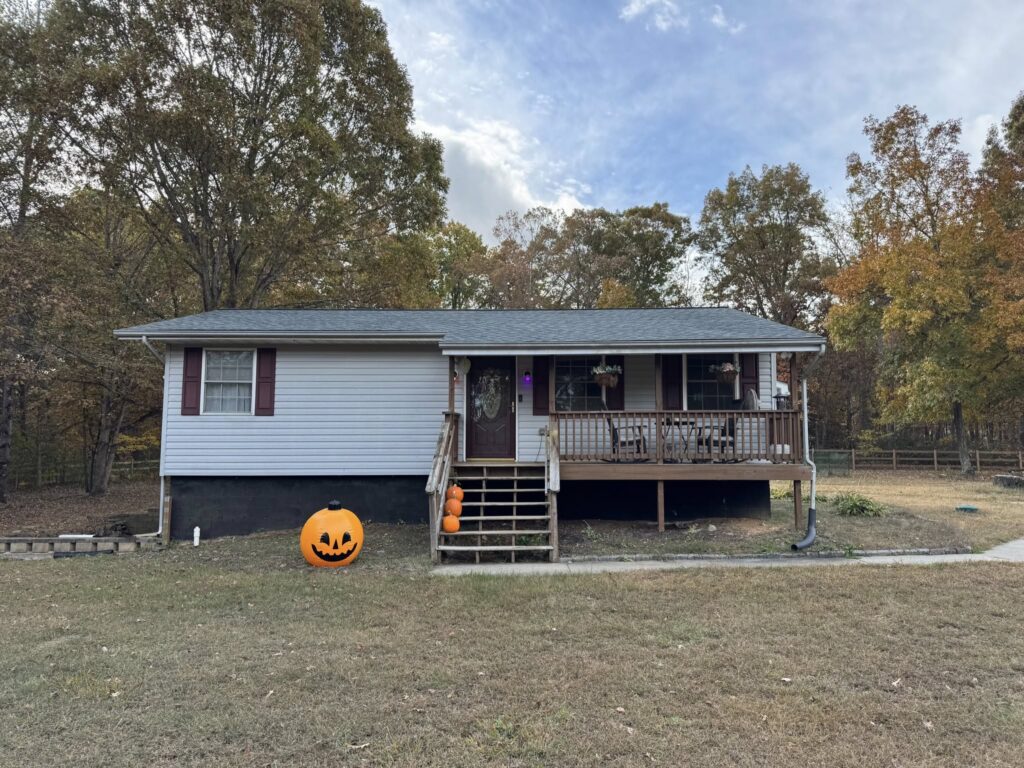
Start with a walk around the house on a clear day. Scan for shingles that are cracked, cupped, curling at the edges, or missing entirely, and for dark streaks or patches where granules have worn away. Check the ridge line for sagging and look closely at the metal flashing around the chimney, pipes, and roof valleys, since flashing failures cause more leaks than the shingles themselves. Binoculars turn this into a five minute job with no ladder involved.
Pay extra attention to the south and west faces, which take the hardest sun in our part of Virginia, and to anything that changed after a summer storm. While you are at it, note tree limbs hanging within a few feet of the roof. Fall and winter storms turn those limbs into shingle scrapers and gutter loaders, and trimming them in October is far cheaper than repairing what they do in January.
Gutters do the heavy lifting in fall
Gutters exist to move water away from your roof edge and foundation, and fall is when Fauquier County trees test them hardest. Clogged gutters back water up under the first courses of shingles, rot fascia boards, and dump overflow along your foundation. Once temperatures drop, that trapped water freezes, and ice in a packed gutter pries at everything it touches. Most local homes need gutters cleared twice in fall: once mid drop and once after the trees finish.
While the gutters are clean, check the details that make them work. Downspouts should discharge several feet from the foundation, extensions should actually be attached, and gutter runs should slope toward the downspouts without sagging between hangers. Water sheeting over the gutter edge during rain, or hanging icicles later in winter, are both signs the system needs attention. If climbing ladders is not your idea of a Saturday, gutter cleaning and inspection is an easy service call.
The attic tells the truth
Some of the most important roof checks happen indoors. On a bright day, look up in the attic with the lights off: pinholes of daylight around penetrations mean water has a path too. Scan the underside of the roof deck for dark stains, damp insulation, or a musty smell, and check that bathroom fans are venting outside instead of dumping steam into the attic space.
Ventilation and insulation earn their keep in winter. An attic that traps warm, moist air melts snow on the roof, and that meltwater refreezes into ice dams at the cold eaves, backing water up under the shingles. Clear soffit vents, adequate insulation, and unblocked airflow from eaves to ridge keep the roof deck cold and even, which is exactly what you want. If your home has a history of icicles and ice dams, fall is the season to fix the cause instead of chipping at the symptom.
Fix small problems while they are still small
Fall is repair season for a reason. A lifted shingle, a nail pop, a small flashing gap, or a cracked pipe boot costs little to fix in October. Left alone, winter expands every one of those defects: water sneaks in, freezes, widens the gap, and repeats the cycle until a stain appears on your ceiling in February, when roof work is slower, colder, and more expensive to schedule.
This is also the right time for a professional inspection if your roof is past its mid teens in age, took hail this summer, or has any history of leaks. A roofer can evaluate the shingles up close, document any storm damage while an insurance claim is still practical, and give you an honest read on whether the roof needs a repair, a plan, or nothing at all. Contractor schedules fill fast once the first cold snap sends everyone calling at once, so early fall bookings get the good weather windows.
Bottom Line
Fall roof prep comes down to four moves: inspect from the ground, keep gutters clear and flowing, verify the attic is dry and ventilated, and repair small issues before freeze thaw season turns them into ceiling stains. An hour of attention now protects the whole winter. If you would rather have professional eyes on it, Berry Good Builders inspects and repairs roofs and gutters across Warrenton and Fauquier County, and fall is the perfect time to get on the schedule.
Related reading: our gutter installation cleaning services, Planning a Bathroom Remodel in Warrenton, VA: Where to Start


